


With just two employees in the finance department, Gatehouse runs a complex business with five CVR numbers and two foreign companies. The key to efficiency is a standard ERP system from IFS and an almost religious approach to process management, data quality and digitalisation.
GateHouse is one of Denmark's leading suppliers of software for satellite communication and maritime use. It is also a thoroughly digitised and lean powerhouse that can be a role model for other companies.
On the surface, GateHouse looks like a typical Danish mid-market company, but its 60+ employees are part of an extremely dynamic universe where resources are moved around and new business ideas are developed at an enviable pace.
In addition to the core business, which is built around the two companies GateHouse SatCom and GateHouse Maritime, GateHouse has also established the company Igniter, which develops new businesses. CleanQuote A/S is the other, which is currently under construction.
”Although we are a small company, Gatehouse is a complex business. We currently have five VAT numbers and companies in the US and Ireland, but the engine room is run by a very small staff. We are just two permanent employees in the finance department who do all the accounting, business controlling, financial controlling, project controlling and analyses. And we still go home at 16.30. It's pretty crazy.”, says GateHouse CFO, Kenney Vesteraa Christiansen, who is surprised that his original vision is actually proving to be true.
Thinking big from the start
Kenney Vesteraa Christiansen is the driving force behind the ERP investment GateHouse made in 2020. On his recommendation, the company chose a full ERP system from IFS, which many might consider an exaggeration for a company of GateHouse's size. But the IFS platform is a perfect fit because it is made up of modules and can therefore dynamically adapt to the company's changing needs.
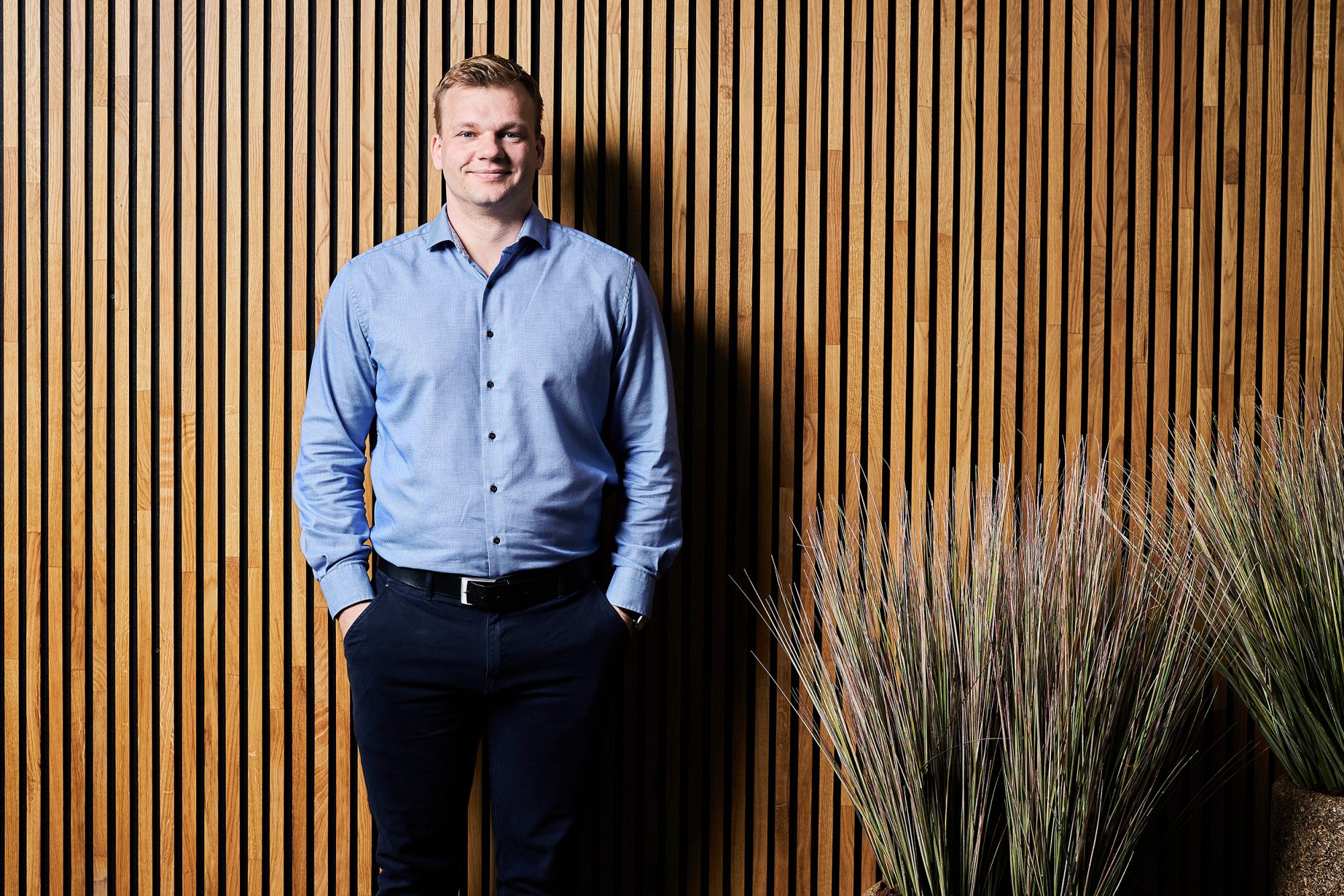
”The system is incredibly agile because everything is fully automated. If we didn't have the IFS platform, we would need at least two or three more permanent employees in the finance department,” says Kenney Vesteraa Christiansen, adding that GateHouse has chosen a 100 per cent standard solution.
Standard solution is the key to agility
”Some people mistakenly believe that there is a contradiction between standard solutions and agility. This is not the case. In reality, we have an entire football pitch to play on, where the framework is in place and creativity can unfold. For example, we have the entire staff apparatus with HR, IT, Shared Service, Finance, etc. ready in IFS, which is why we were able to connect our newest company CleanQuote at the snap of a finger. CleanQuote had one employee four months ago and now there are six. They have full speed and can focus all their efforts on business development because all the administrative stuff is running smoothly," he explains.
Steadfast data and process discipline
It is not only in the choice of a pure standard ERP solution that GateHouse stands firm. The uncompromising decision goes hand in hand with a steadfast data and process discipline that you won't find many other places. Everything is digitalised from the start, and everyone follows the processes and best practices defined within the company. This is why GateHouse has exceptionally good master data.
”The master data keys are well defined and the process for order management is always the same, to give just one example. There's nothing written on a napkin and no one is fiddling with their own methods. The combination of standard systems, process discipline and good master data is the key to becoming lean in the super league.”, says Kenney Vesteraa Christensen.
Everyone is self-driving
”This means that we have been able to establish a highly agile system landscape where the raw data from all our systems - ERP, lead generation, campaign tools, etc. - is fed into a BI platform and translated into value-creating insights”, he says and continues:
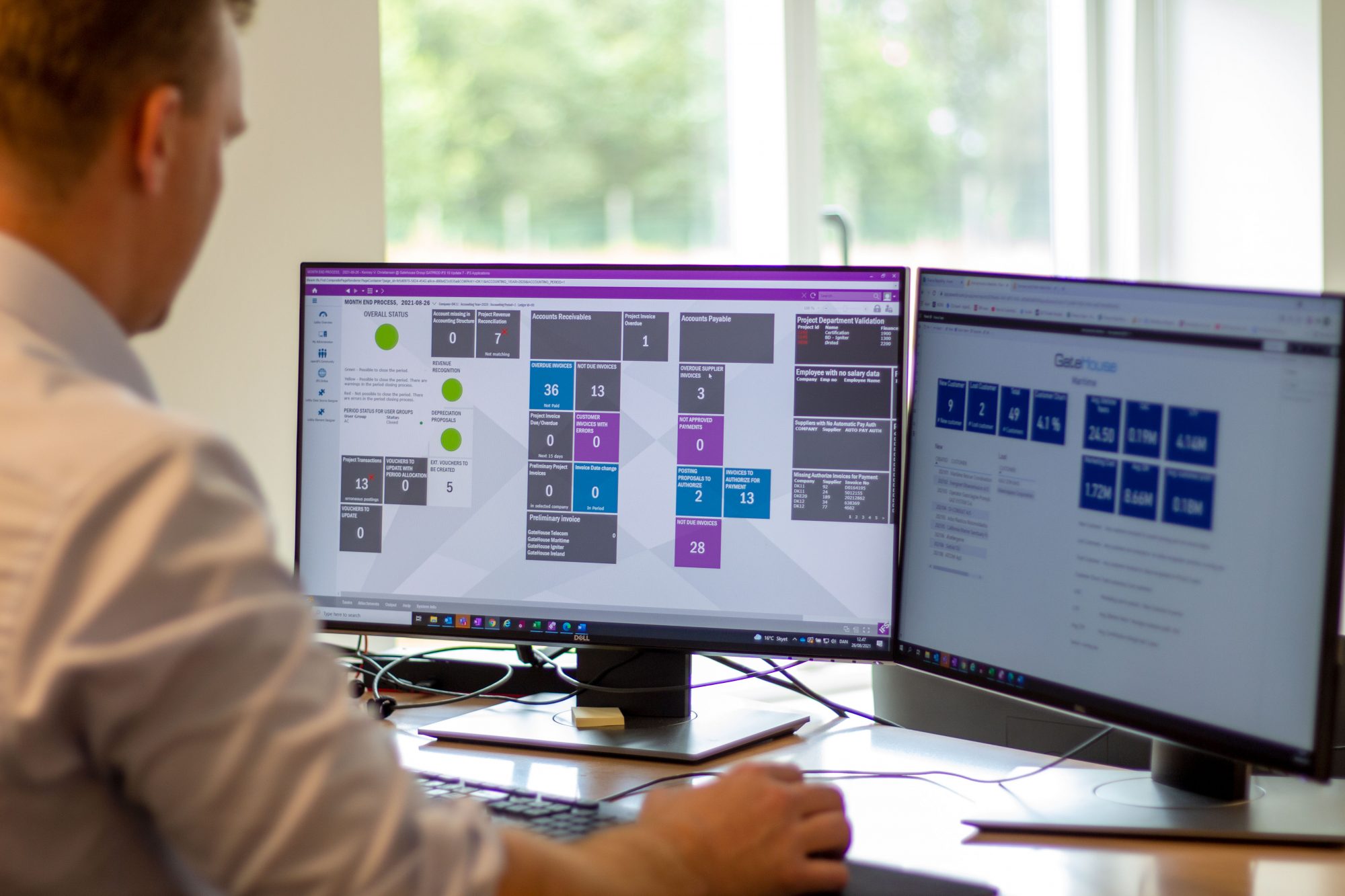
”I have a full real-time overview of everything. I don't have to calculate anything first to see how the economy is in each product category, and I can add the pipeline of leads with a click and see what it means financially if they materialise. We have a full overview of how customers move through our business, what their status is, what they've bought, whether they need support, etc. And the same goes for all my colleagues in the company. They are self-driving and have all the relevant data available when they need it. We don't need to disturb each other unnecessarily. Therefore, we can run a very lean business.”
IFS is suitable for everyone
At Curit, who helped implement the IFS platform in GateHouse, there is no doubt that many companies can learn important lessons from the project. Curit has implemented the vast majority of the IFS solutions in Denmark for both small and large companies.
”Whether you're a small or large organisation, you're faced with advanced requirements. The difference is that the small business has much fewer people to fulfil the tasks. The unique thing about the IFS platform is that it can be used by both 15 and 2,500 employees. There is so much elasticity in the solution that it also creates value for small businesses, and GateHouse has proven that.”, says Curit partner Peter Eskelund Bering.
”Normally ERP systems have one screen for sales, another for purchasing, a third for finance, etc. but in smaller companies, the same person can easily sit in three branches of the system. In IFS, you can easily merge the interfaces so that you only have one screen. In addition, IFS has a built-in internal trading engine, which makes it very easy to tie new companies together if they need to trade. Again, GateHouse is a great example to illustrate this agility.”, says Peter Eskelund Bering.